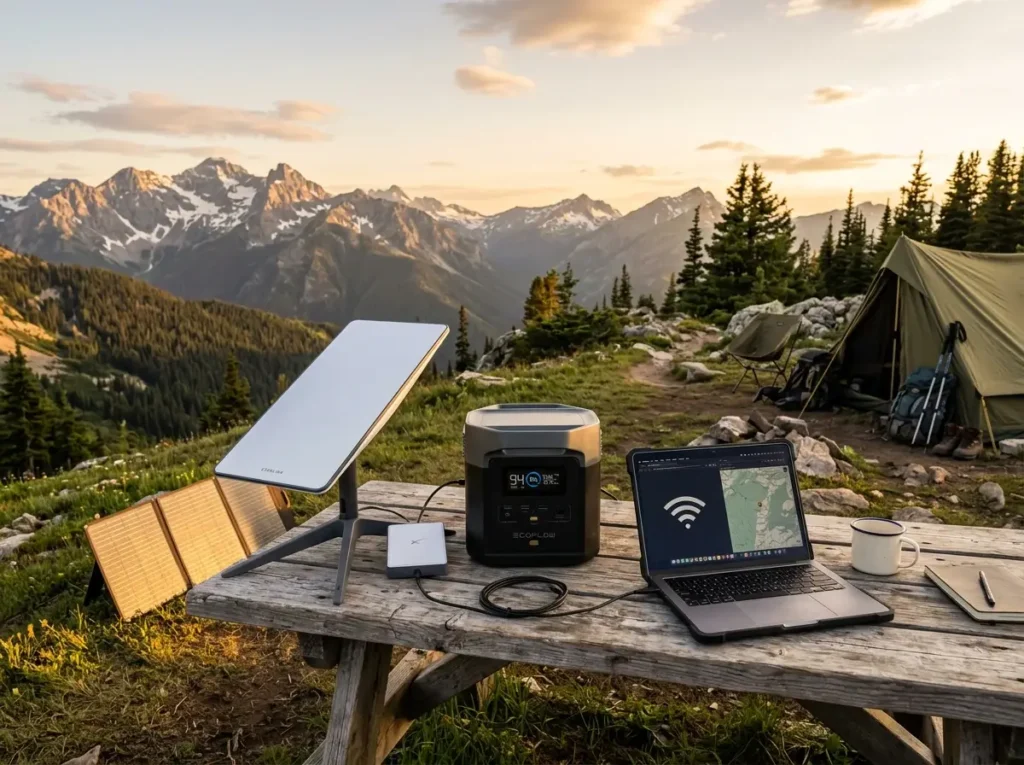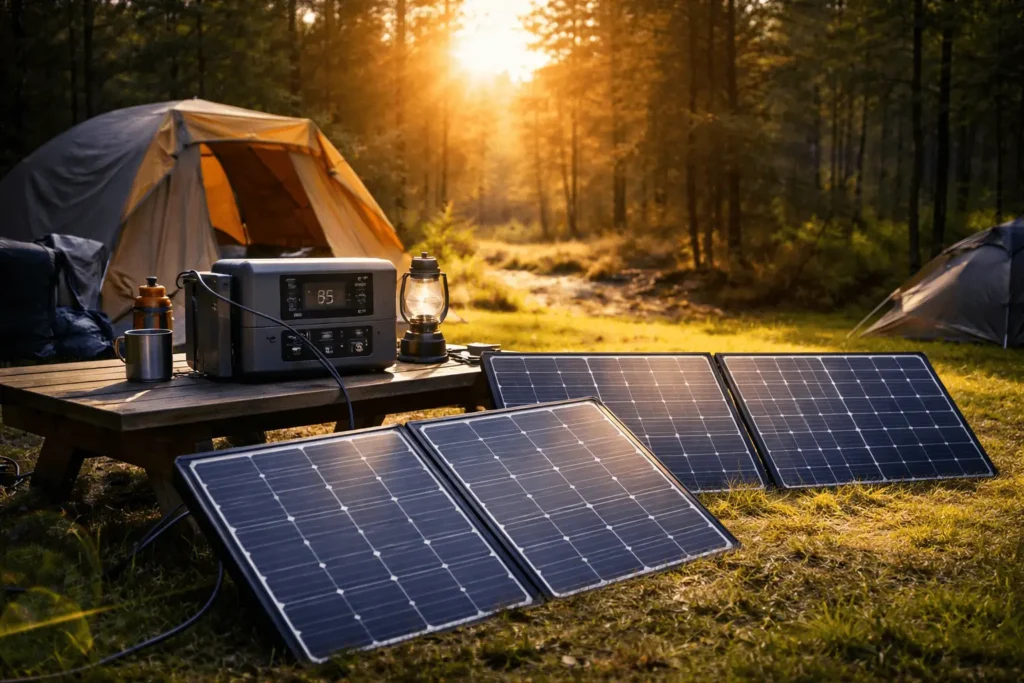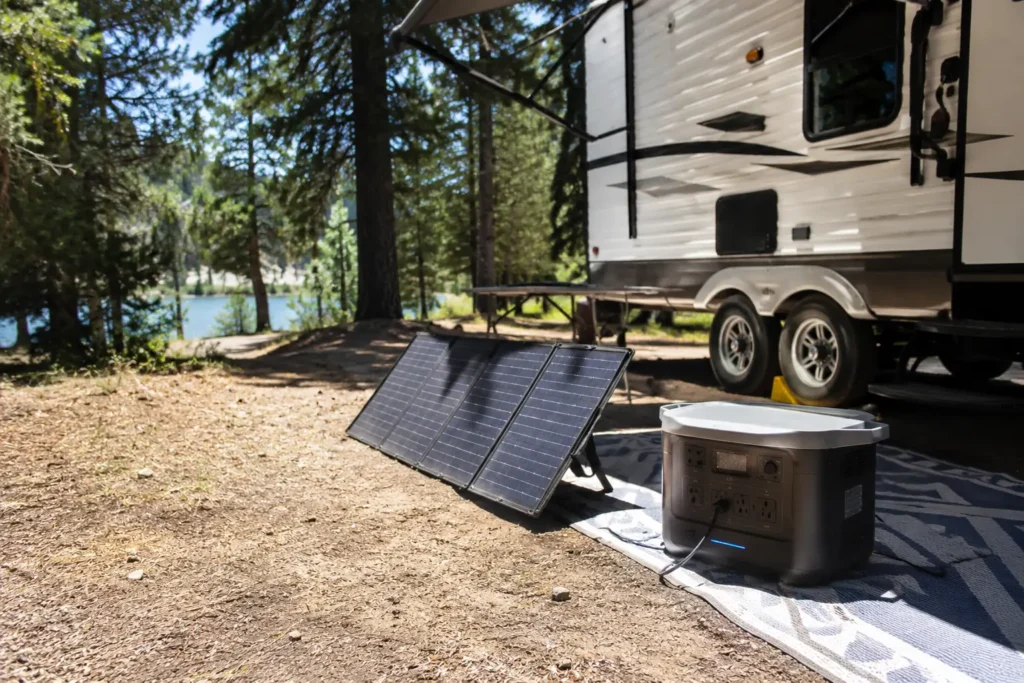
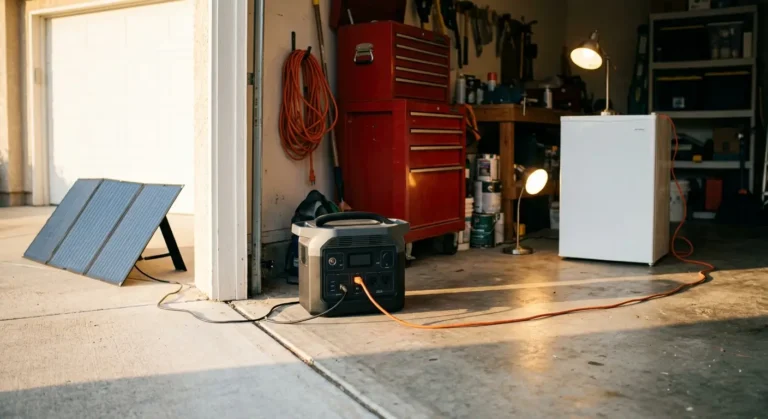
The best solar generator for home backup is the one that keeps your fridge, router and a few lights alive for 24 hours, then refills from panels the next day. Capacity alone won’t get you there. Output watts, recharge speed and battery chemistry decide whether the unit survives a real outage.
Most buyers pick a number off a spec sheet and hope. This article gives you the math first, then the products.
Table of Contents
What Makes the Best Solar Generator for Home Backup
Three specs matter more than any marketing badge. Learn them and you can read any product page in 60 seconds.
Watts vs Watt-Hours
Watts measure how much power a unit delivers at one moment. Watt-hours measure how long it can keep delivering. A 2,200W inverter with a 2,000Wh battery can start a big load, but it drains in about an hour if you push it to the limit.
Here’s what I learned the hard way: I bought on capacity alone. The first time I tried running a 1,200W space heater, the battery died in about 90 minutes. Heaters, ovens and dryers eat watt-hours faster than anything else in a house.
Battery Chemistry and Cycle Life
LiFePO4 (also called LFP) batteries last roughly 3,000 to 6,000 cycles, and some brands claim more. Bluetti rates the Elite 200 V2 at over 6,000 cycles, while Jackery and Anker both quote a 10-year lifespan. Older NMC lithium-ion cells usually give 500 to 3,500 cycles.
Use the unit every week for camping or load shifting and chemistry matters a lot. Keep it in a closet for blackouts only and it matters less. LFP also handles heat better, which counts when you store the unit in a garage.
Recharge Speed and Solar Input
A big battery that takes two days to refill is a trap. Look for two numbers: how fast it charges from the wall and how fast it charges from panels. Wall charging gets you ready before a storm. Solar charging keeps you running after it hits.
Check the voltage window on the solar input too. Panels wired in series can exceed it and trip the charge controller.
Best Solar Generators for Home Backup Compared
I narrowed the field to four units that cover most households, from a fridge-and-lights setup to near whole-home backup. All four accept solar panels, run AC loads and use LiFePO4 batteries.
| Model | Capacity | Continuous AC Output | Weight | Chemistry | 240V Output | Expandable | Price |
|---|---|---|---|---|---|---|---|
| Jackery Explorer 2000 v2 | 2,042Wh | 2,200W | 39.5 lb | LiFePO4 | No | No | Amazon price |
| Bluetti Elite 200 V2 | 2,073Wh | 2,600W (3,900W lifting) | 53.4 lb | LiFePO4 | No | No | Amazon price |
| EcoFlow Delta Pro | 3,600Wh | 3,600W (4,500W X-Boost) | 99 lb | LiFePO4 | Yes | Yes, up to 25kWh | Amazon price |
| Anker SOLIX F3800 | 3,840Wh | 6,000W | 132.3 lb | LiFePO4 | Yes | Yes, up to 26.9kWh | Amazon price |
Quick Picks by Situation
Fridge, router and lights, carried by one person: The Jackery Explorer 2000 v2 weighs 39.5 lb, which makes it the lightest 2kWh option here. It also carries UL1778 certification for uninterruptible power use, with 20ms switchover.
Fridge and lights with the most output per dollar of weight: The Bluetti Elite 200 V2 delivers 2,600W continuous and a 3,900W lifting mode. It switches to battery in 15ms or less and sips only 10W in standby.
Window AC, well pump or sump pump: The EcoFlow Delta Pro gives you 3,600Wh, 3,600W output and 4,500W with X-Boost. You can add extra batteries later.
Near whole-home backup: The Anker SOLIX F3800 pushes 6,000W at 120V or 240V and has a NEMA 14-50 port. It weighs 132.3 lb, so plan where it lives.
How to Size a Solar Generator for Home Backup
Skip the guessing. Add up what you actually need to run, then add a buffer.
The Load Math in Four Steps
- List every device you must keep running.
- Write down its running watts (check the label).
- Multiply watts by hours per day to get watt-hours.
- Add 20% for inverter losses.
A modern fridge draws about 120W while the compressor runs, roughly 40% of the day. That is about 1,150Wh per day. A router and modem at 20W add 480Wh. Running Starlink instead of a regular router? Check how long a solar generator runs Starlink Mini. Two LED lights and phone charging add maybe 300Wh. You land near 1,900Wh before the buffer.
Match the Surge, Not Just the Average
Motors pull three to seven times their running watts for a split second. A fridge that runs at 120W can ask for 700W at startup. A well pump can ask for 2,000W or more. If the unit’s boost or surge rating sits below that number, it shuts down mid-outage. Check that spec on the product page before you check anything else.
Real-World Test Examples for a Solar Generator Home Backup Setup
These figures come from spec math and listing claims, not lab perfection. Real numbers shift with clouds, cable length and panel angle. Treat them as planning targets.
Example 1: Fridge and Router on the Jackery Explorer 2000 v2
Load: 120W fridge at 40% duty plus 20W router, about 1,630Wh per day. The battery gives roughly 1,740Wh usable after inverter losses. That is about 25 hours without sun.
Jackery says 400W of panels charge the unit in as little as 6 hours. In real conditions, 400W at 5 peak sun hours and 75% efficiency gives about 1,500Wh. You fall short by roughly 130Wh a day. Add a third 200W panel and the gap closes.
Example 2: Window AC on the EcoFlow Delta Pro
A 5,000 BTU window unit draws around 450W while running. With 3,600Wh and 85% efficiency, you get roughly 6.8 hours of cooling. Not overnight, but enough to get through an afternoon heat spike.
Example 3: Recharge Time at 90°F on the Bluetti Elite 200 V2
Bluetti claims a full solar charge in 2.4 hours with 1,000W of panels. Hot panels lose output, so figure 700W real input on a 90°F afternoon. That stretches the charge to about 3.4 hours of strong sun. Plan around the slower number.
Solar Generator Home Backup Reviews: The Four Units Broken Down
Spec tables only get you so far. Here is how each unit behaves when the grid goes down and you need it to work.
Jackery Explorer 2000 v2: Best Solar Generator for Home Backup You Can Carry
This is the unit I would hand to someone who has never bought a power station. It holds 2,042Wh, delivers 2,200W through 3 AC ports and weighs 39.5 lb. Jackery says it is 41% lighter and 34% smaller than a typical 2kWh LiFePO4 unit. Having lifted heavier ones, I believe it.
Charging is fast. The wall takes it from 0 to 80% in 66 minutes, and the app’s emergency mode fills it in 102 minutes. Silent Charging runs at about 30dB, so you can sleep next to it. The 20ms switchover and UL1778 certification make it a real UPS for a router or desk.
The catch: it outputs 120V only. Skip it if you need to start a 240V well pump.
Bluetti Elite 200 V2: Best for Output and Efficiency
The Elite 200 V2 stores 2,073Wh and pushes 2,600W continuous, with a 3,900W lifting mode for loads that spike. Bluetti says it runs up to 9 devices at once. That covers a fridge, a coffee maker and a hair dryer without a fight.
Two details stand out. Standby draw sits at 10W, which means less energy wasted overnight. And the battery carries a 6,000+ cycle rating, so daily use won’t kill it in three years.
Charging is flexible. Turbo mode reaches 80% in 1 hour from the wall, and solar fils it in about 2.4 hours with 1,000W of panels. At 53.4 lb, it is heavier than the Jackery but still a one-person lift.
EcoFlow Delta Pro: Best for Motors and Growth
The Delta Pro gives you 3,600Wh and 3,600W continuous. X-Boost pushes output to 4,500W for stubborn motor starts, and two linked units reach 7,200W. That is why it handles window ACs and sump pumps.
It expands from 3.6kWh to 25kWh with extra batteries, so you can start small and grow. Wall charging in 240V mode fills it in 1.8 hours. The unit weighs 99 lb. Buy a wheeled cart or keep it where you will use it.
Anker SOLIX F3800: Best for Near Whole-Home Backup
This is the heavyweight at 3.84kWh and 6,000W. It supplies both 120V and 240V, so it can run a dryer. It also has a NEMA 14-50 port that can charge an EV at up to 6,000W or feed an RV. (More about RV in our best solar generator for RV article)
Add up to 6 battery packs and capacity climbs to 26.9kWh. Anker backs it with a 5-year warranty and quotes a 10-year lifespan. At 132.3 lb, it stays put. Wiring it into your home circuits needs a licensed electrician and a transfer switch.
Best Solar Panels to Pair With a Solar Generator for Home Backup
A great battery with weak panels is a very expensive flashlight. Panels decide whether you recover or slowly drain.
How Many Watts of Panels You Actually Need
Use this rule: divide your daily watt-hour use by 3 if you get roughly 4 to 5 peak sun hours. A 1,900Wh daily load needs about 630W of panels in decent conditions. Round up. Clouds, tilt and heat cut output by 20% to 40%.
Here is a quick reference:
- 400W of panels: fridge and router only, in strong sun
- 800W to 1,000W of panels: fridge, router, lights and some extras
- 1,600W or more: AC loads, fast refills, multi-day outages
For scale, EcoFlow quotes 2.8 hours to full using four 400W panels. Bluetti quotes 2.4 hours with 1,000W.
Series vs Parallel Wiring
Wire in series and voltage adds up. Wire in parallel and amperage adds up. Every solar generator has a voltage window and an amp limit. Go over either one and the solar charge controller shuts down or, worse, gets damaged.
Read the solar input page of the manual before buying panels. Do it twice. Match panel open-circuit voltage to the unit’s maximum input voltage, and remember that cold weather raises panel voltage.
Rigid vs Portable Panels
Folding portable panels pack away fast and suit renters. Rigid rooftop or ground-mount panels deliver better efficiency per dollar and survive weather. Staying put for years? Go rigid. Moving often or worried about storms? Go portable. If you go portable, check our picks for the best portable solar panels before you buy.
Mistakes to Avoid When Buying a Solar Generator for Home Backup
I have watched people make the same four errors again and again. I made two of them myself.
Buying on Capacity Alone
This is my mistake from earlier, and it is the most common one. A big battery with a weak inverter cannot start your loads. A strong inverter with a small battery dies in an hour. Match the pair to your actual appliances.
Ignoring Surge Watts
Your fridge compressor, pump or AC can pull three to seven times its running watts for a split second. If the unit’s boost rating sits below that spike, it cuts out and you find out at 2 a.m. during an outage.
Skipping the Test Run
Do not wait for a storm. Plug in your essential loads on a sunny weekend and time the runtime. Log the watts from the unit’s display. You will learn more in four hours than from ten reviews.
Power Outage Setup and Safety for Your Solar Generator
A good solar generator for home backup does nothing if you set it up badly. Safety and placement come first.
Where to Place the Unit
Keep it indoors or in a covered, ventilated spot. Heat shortens battery life and direct rain can trip safety systems. Never run a gas generator in the same space, and never charge or store a power station near flammable materials.
Extension Cords and Transfer Switches
Use heavy-gauge cords rated for your load. A thin cord on a 1,500W appliance heats up and wastes power. To feed home circuits directly, install a transfer switch or interlock kit through a licensed electrician. Never backfeed a house panel through a standard outlet.
Keep the Battery Ready
Store the unit at 40% to 80% charge if it sits for months and top it off every 3 months. LiFePO4 handles storage well, but a battery left empty can lose capacity permanently. Set a phone reminder. It takes two minutes.
FAQ: Best Solar Generator for Home Backup
What is the best solar generator for home backup?
It depends on your loads. The Jackery Explorer 2000 v2 suits fridge and router backup, the Bluetti Elite 200 V2 adds more output, the EcoFlow Delta Pro handles motor loads and the Anker SOLIX F3800 covers near whole-home needs.
How long will a solar generator for home backup run a refrigerator?
A 2,000Wh unit runs a typical fridge, router and a few lights for about 24 to 30 hours without sun. With solar panels, it can run indefinitely in good weather.
Can a solar generator power a whole house?
Only large, expandable units can, and only with a transfer switch installed by an electrician. The Anker SOLIX F3800 with extra battery packs is the closest option here.
How many solar panels do I need for home backup?
Plan about 630W of panels for a 1,900Wh daily load in good sun. Add more for clouds, heat and AC loads.
Is a solar generator better than a gas generator for home backup?
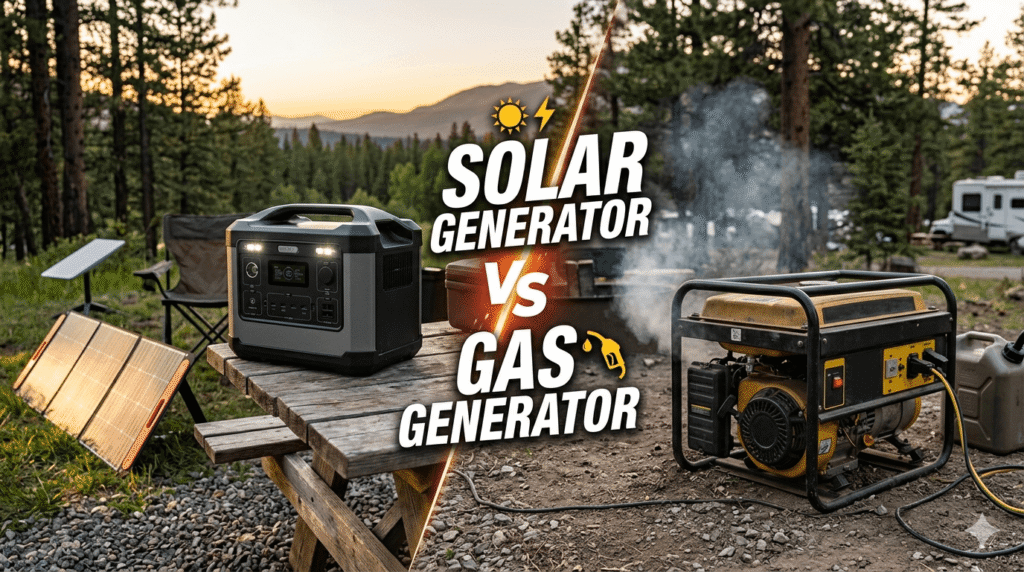
It is quieter, has no fumes and needs no fuel runs. Gas wins on raw runtime for multi-day outages unless you add enough panels and battery packs.