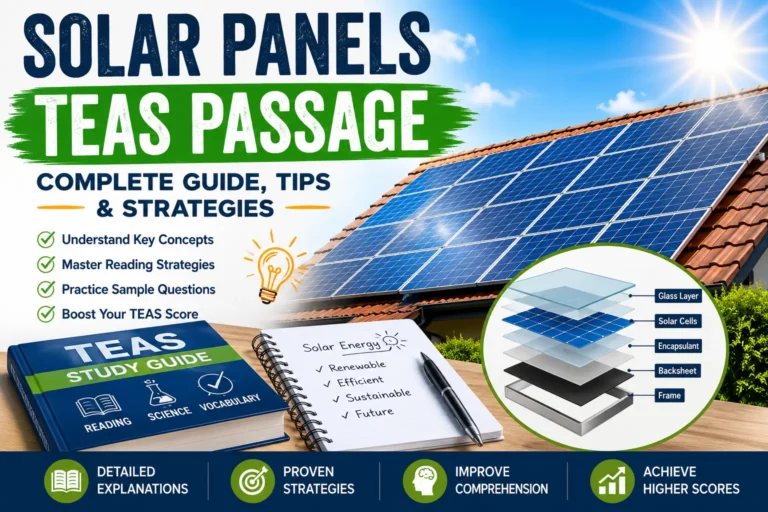
If you’re prepping for the TEAS, encountering an informational science passage like Solar Panels TEAS is highly likely. Don’t let the technical jargon fool you – the exam isn’t testing your background in engineering or physics. Instead, Solar Panels TEAS passages are designed to gauge your core reading comprehension: can you find the main point, dissect supporting details, and figure out terms from context?
Think of it this way: the skills you use to break down a Solar Panels TEAS passage about renewable energy are the exact same ones you’ll need in nursing school when analyzing patient charts or complex research papers.
Table of Contents
What Exactly is the Solar Panels TEAS Passage Testing?
At its core, a Solar Panels TEAS passage is a vehicle to test specific reading benchmarks. ATI TEAS examiners want to see if you can:
- Pinpoint the author’s primary intent.
- Separate the central theme from minor supporting arguments.
- Decode technical vocabulary using surrounding context clues.
- Recognize cause-and-effect relationships and draw logical conclusions.
The Core Science: A Quick Refresher
You don’t need a PhD in renewable energy to master a Solar Panels TEAS passage, but knowing the basic terminology makes navigating the passage much faster.
How Solar Energy Works
Solar power relies on radiant energy from the sun. Through photovoltaic (PV) technology, we can capture this sunlight and turn it into electricity. Unlike fossil fuels, solar energy is inherently sustainable because sunlight replenishes naturally every day without emitting harmful greenhouse gases.
Breaking Down a Solar Panel System
A standard solar panel is essentially a collection of photovoltaic cells. When photons (light particles) hit these cells, they excite electrons inside the semiconductor material (usually silicon). This movement generates Direct Current (DC) electricity.
However, since standard households run on Alternating Current (AC), the system relies on an inverter to convert that power before it hits your appliances.
A standard setup includes:
- Solar panels & mounting hardware
- Electrical wiring
- A power inverter
- A monitoring system (and optional battery storage)
Key Structural Components
Photovoltaic Cells: The workhorses of the panel, typically made of silicon due to its semiconductor properties. Their efficiency dictates the overall power output.
Tempered Protective Glass: High-strength glass designed to shield the delicate cells from hail, wind, and rain while remaining perfectly transparent to let light through.
Aluminum Frame: Provides structural stability and weather resistance, ensuring the setup lasts for decades.
Encapsulation Layers: Internal layers that seal the cells, keeping moisture out and protecting against temperature shifts.
Types of Solar Panels: A Comparison
Many Solar Panels TEAS reading passages compare different technologies. Here is what you need to look out for:
Monocrystalline Panels: Cut from a single silicon crystal. They are the most efficient and sleek-looking (black), but they come with the highest price tag.
Polycrystalline Panels: Made by melting multiple silicon crystals together. They look blue, are cheaper to make, but require a bit more roof space because they are slightly less efficient.
Thin-Film Panels: Made by depositing photovoltaic material onto flexible surfaces. They are cheap and lightweight, but they have a much shorter lifespan and the lowest efficiency of the three.
| Feature | Monocrystalline | Polycrystalline | Thin-Film |
|---|---|---|---|
| Efficiency | Highest | Moderate | Lowest |
| Cost | High | Moderate | Low |
| Lifespan | 25–35 years | 20–30 years | 10–20 years |
| Best For | Limited roof space | Budget-conscious homeowners | Unique architectural surfaces |
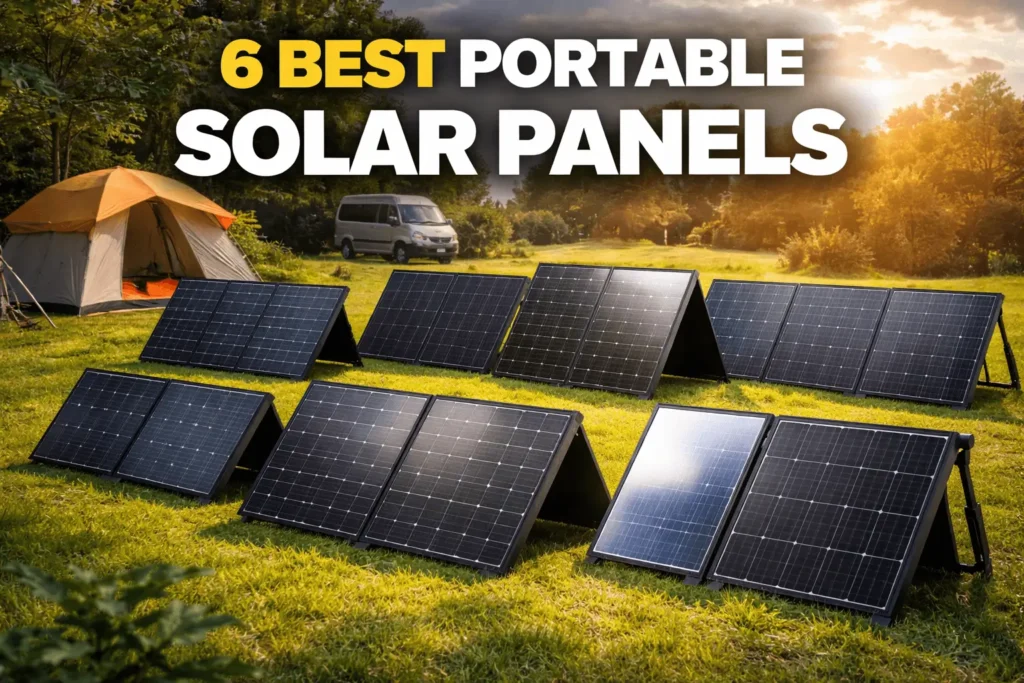
You can find out more in our guide about best portable panels.
Pros, Cons, and Variables
The Upside
Solar power offers clear benefits: it’s a renewable resource, lowers monthly utility bills, cuts down carbon footprints, and requires very little maintenance after setup. These are common advantages highlighted in Solar Panels TEAS reading passages.
The Downside
It isn’t perfect. The upfront installation costs are steep, and power generation drops significantly on cloudy days or during winter. Plus, they produce zero energy at night, making grid connections or expensive batteries mandatory.
What Affects Performance?
If you see a cause-and-effect question in a Solar Panels TEAS passage, look closely at variables like geographic location, roof angles, panel orientation, dust buildup, and tree shade.
Sample Solar Panels TEAS Reading Passage
Solar panels convert sunlight into electricity through photovoltaic cells made primarily of silicon. When sunlight strikes these cells, energized electrons begin moving, creating direct current electricity. Because homes require alternating current, an inverter changes the electrical current before it reaches household appliances. Although weather conditions influence daily energy production, advances in solar technology continue improving efficiency and affordability. Governments in many regions encourage adoption through tax incentives and rebate programs, making renewable energy increasingly accessible for homeowners and businesses alike.
Practice Questions
1. What is the primary purpose of the passage?
A. To explain the mechanism behind solar electricity generation
B. To argue against the use of fossil fuels
C. To detail the manufacturing process of silicon crystals
D. To critique government spending on energy rebates
Correct Answer: A – The text focuses squarely on explaining how solar panels function and convert energy.
2. Based on the text, what is the specific function of an inverter?
A. To store excess electricity for nighttime use
B. To convert direct current into alternating current
C. To protect solar cells from environmental damage
D. To track daily energy production metrics
Correct Answer: B – The passage explicitly states that an inverter changes the electrical current because homes require alternating current.
3. Which of the following can be logically inferred from the passage?
A. Solar panels are entirely useless in cloudy climates.
B. Financial incentives make solar adoption more feasible for consumers.
C. Silicon is the only material that can conduct electricity.
D. Government rebates will expire in the near future.
Correct Answer: B – The passage mentions that tax incentives and rebates make renewable energy “increasingly accessible,” implying a financial benefit.
High-Yield Solar Panels TEAS Vocabulary to Memorize
Photovoltaic: Generating electricity directly from light.
Semiconductor: A solid substance that conducts electricity under specific conditions.
Inverter: A device that changes DC power to AC power.
Renewable: Energy from a source that is not depleted when used.
Master Strategies for the Solar Panels TEAS Reading Section
Read the Questions First: Don’t blindly dive into the passage. Read the stems so your brain knows exactly what keywords (like inverter or silicon) to hunt for.
Trust Only the Text: The Solar Panels TEAS exam loves to include answer choices that are factually true in the real world but not mentioned in the text. If it’s not on the page, don’t pick it.
Watch for Qualifiers: Pay absolute attention to words like always, never, most, sometimes, or usually. A choice that says solar panels never work in winter is wrong; a choice that says they are less efficient is correct.
Eliminate Extremes: If an answer choice sounds overly dramatic or definitive, it’s highly likely a distractor. Lean toward moderate, objective statements.
By practicing with multiple Solar Panels TEAS passages and reviewing the vocabulary above, you’ll become much more comfortable identifying key ideas, supporting details, and correct answer choices on test day.